

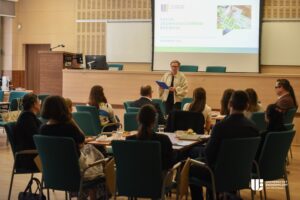
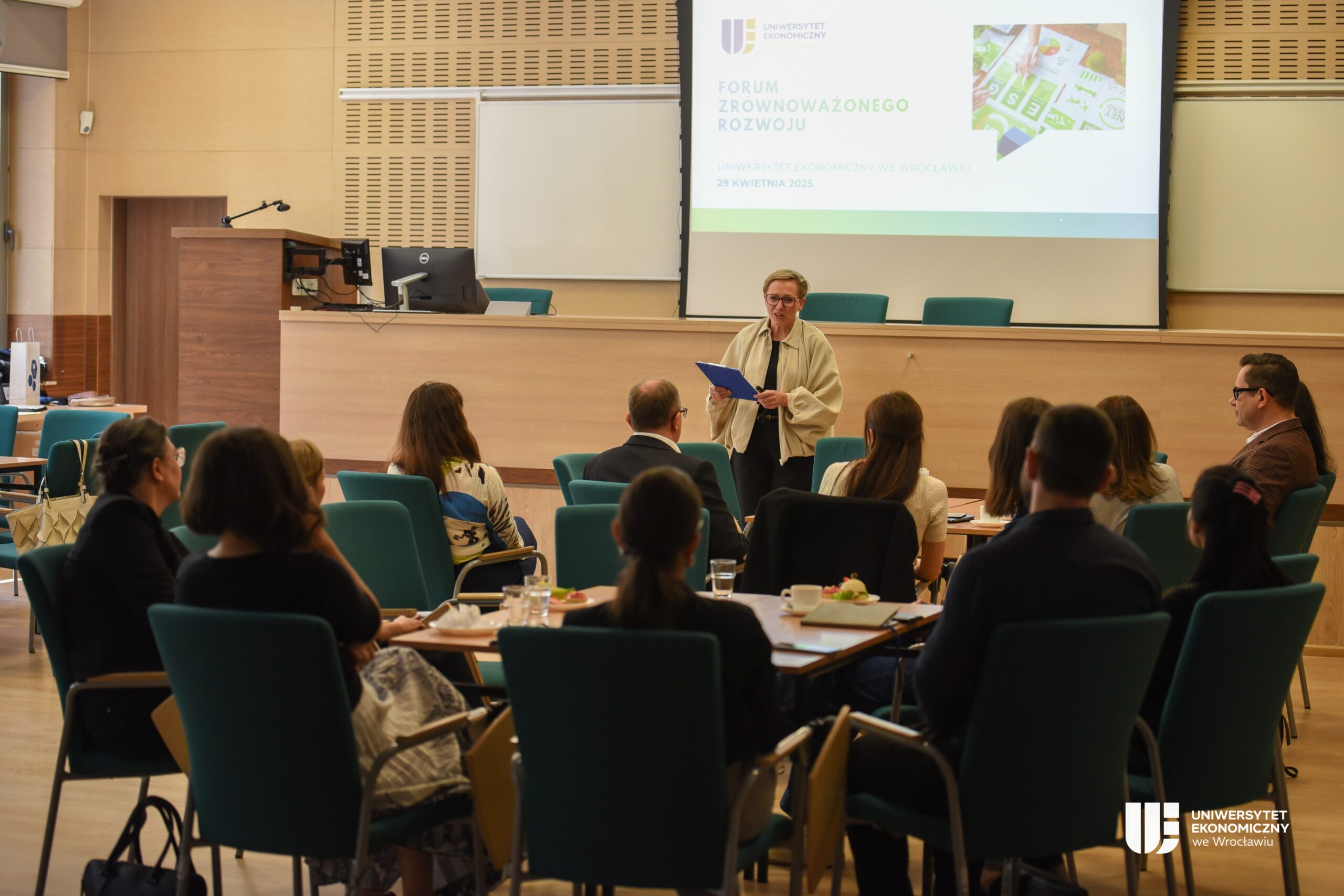
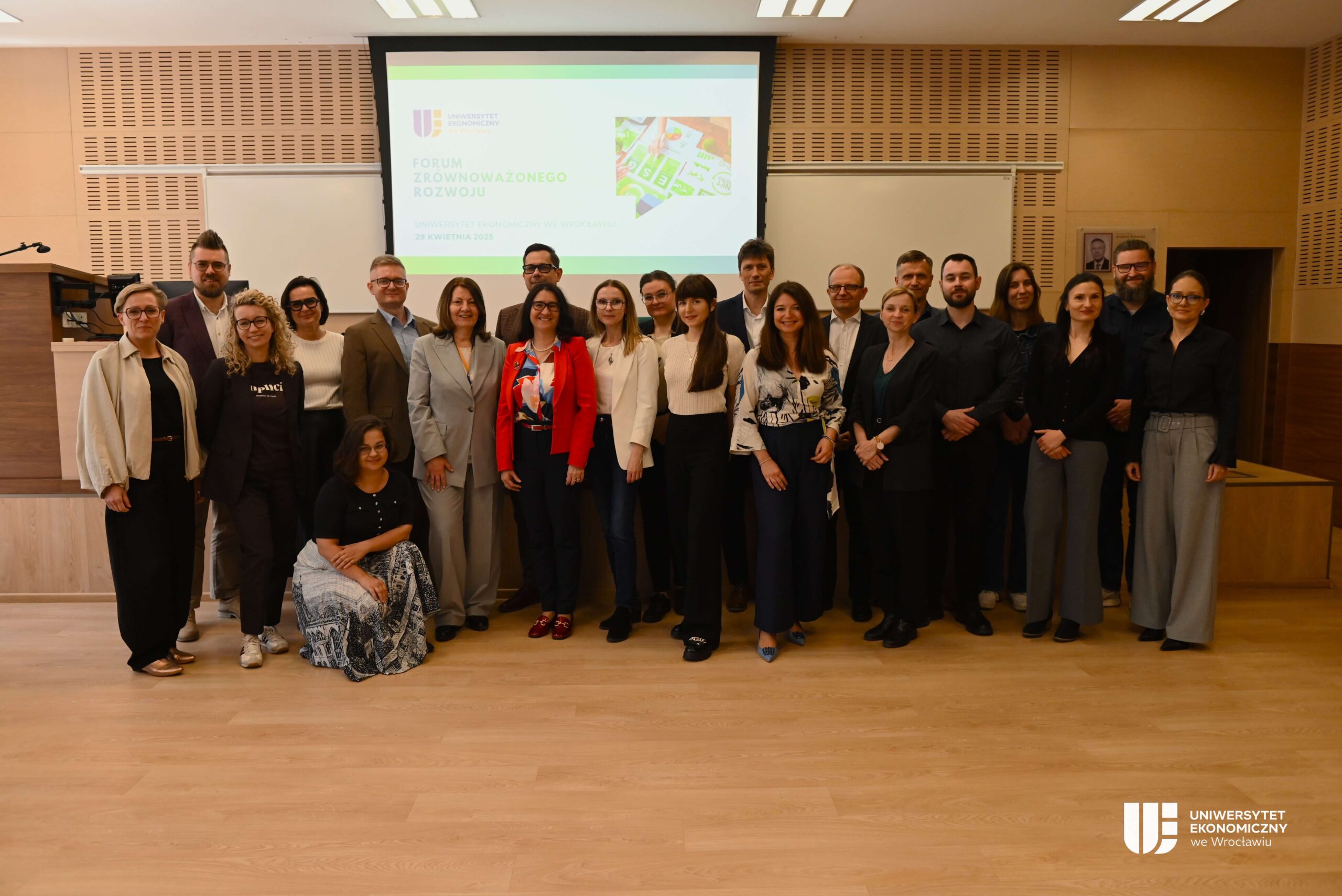
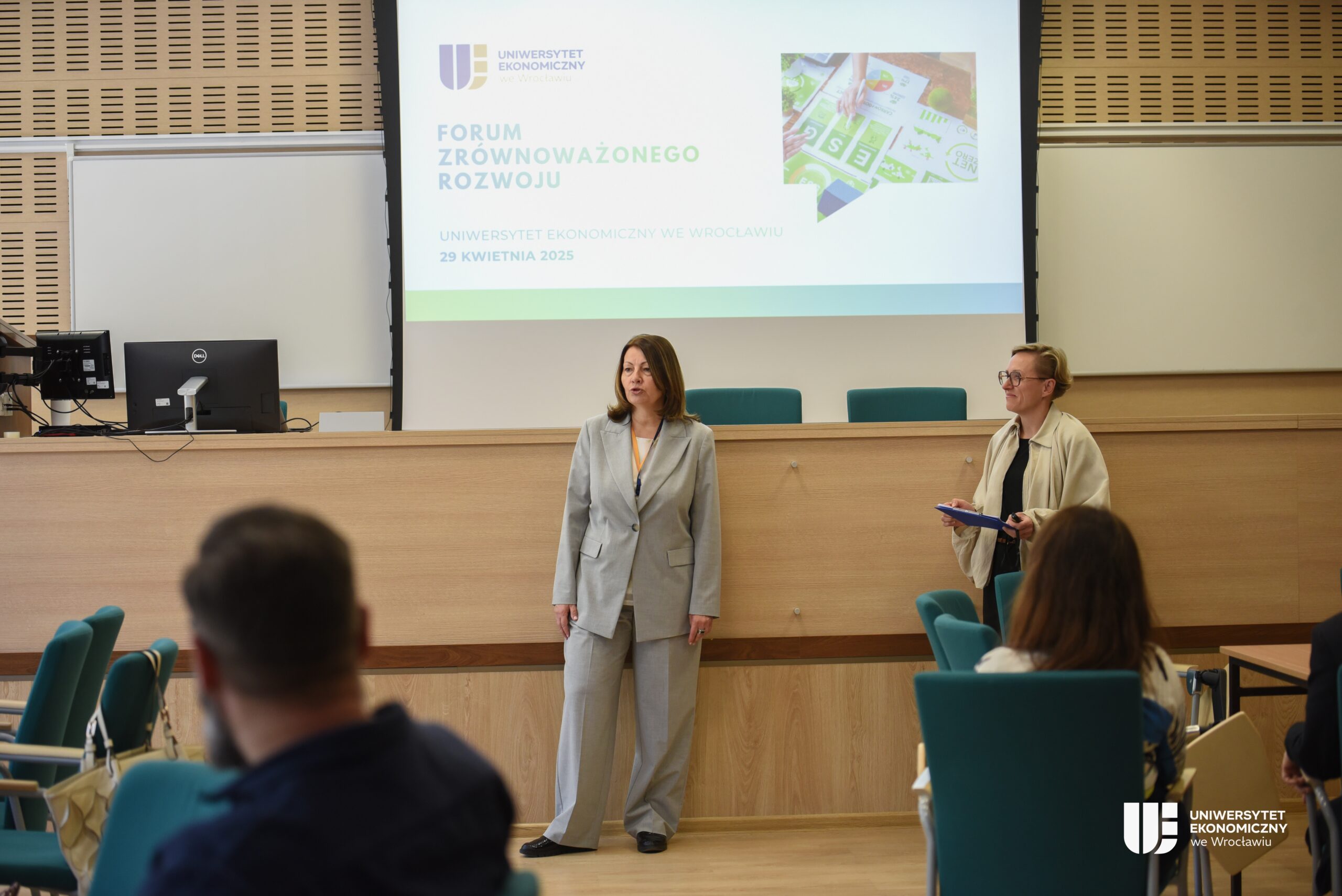
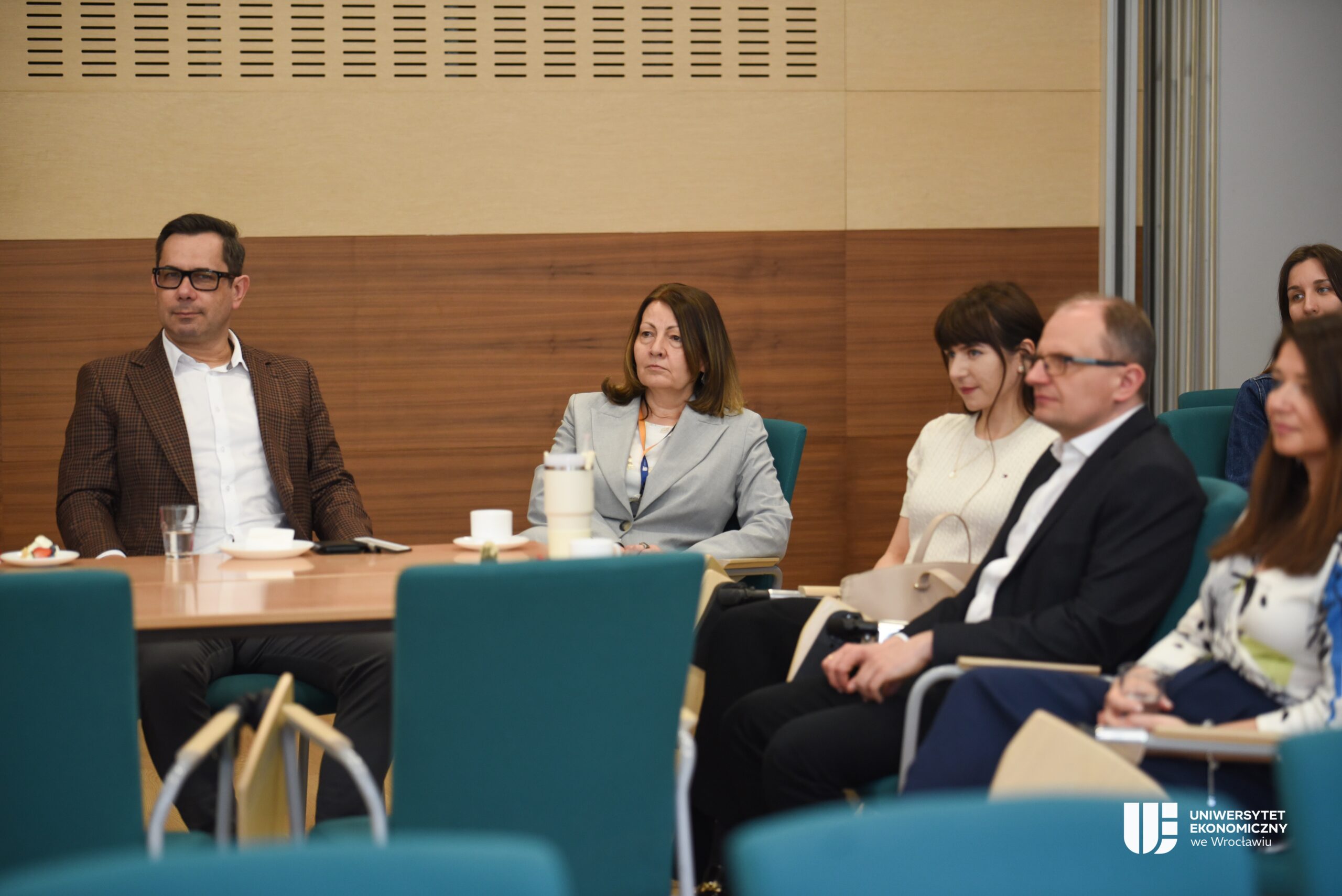
On 29 April 2026, the Wroclaw University of Economics and Business hosted the 4th WUEB Sustainability Forum – a dialogue session bringing together representatives of the university, business, and socio-economic environment institutions. The meeting marked another step in the process of implementing the WUEB Strategy 2030 and the Sustainability Plan and was designed as a space for moving from strategic assumptions to concrete actions.
From Strategy to Action
In the first part of the event, the WUEB Sustainability Plan was presented as a tool operationalising the WUEB 2030 Strategy. It was emphasised that the university focuses on areas where it has the greatest potential for impact: quality of education, cooperation with the economy, innovation, and social and environmental impact.
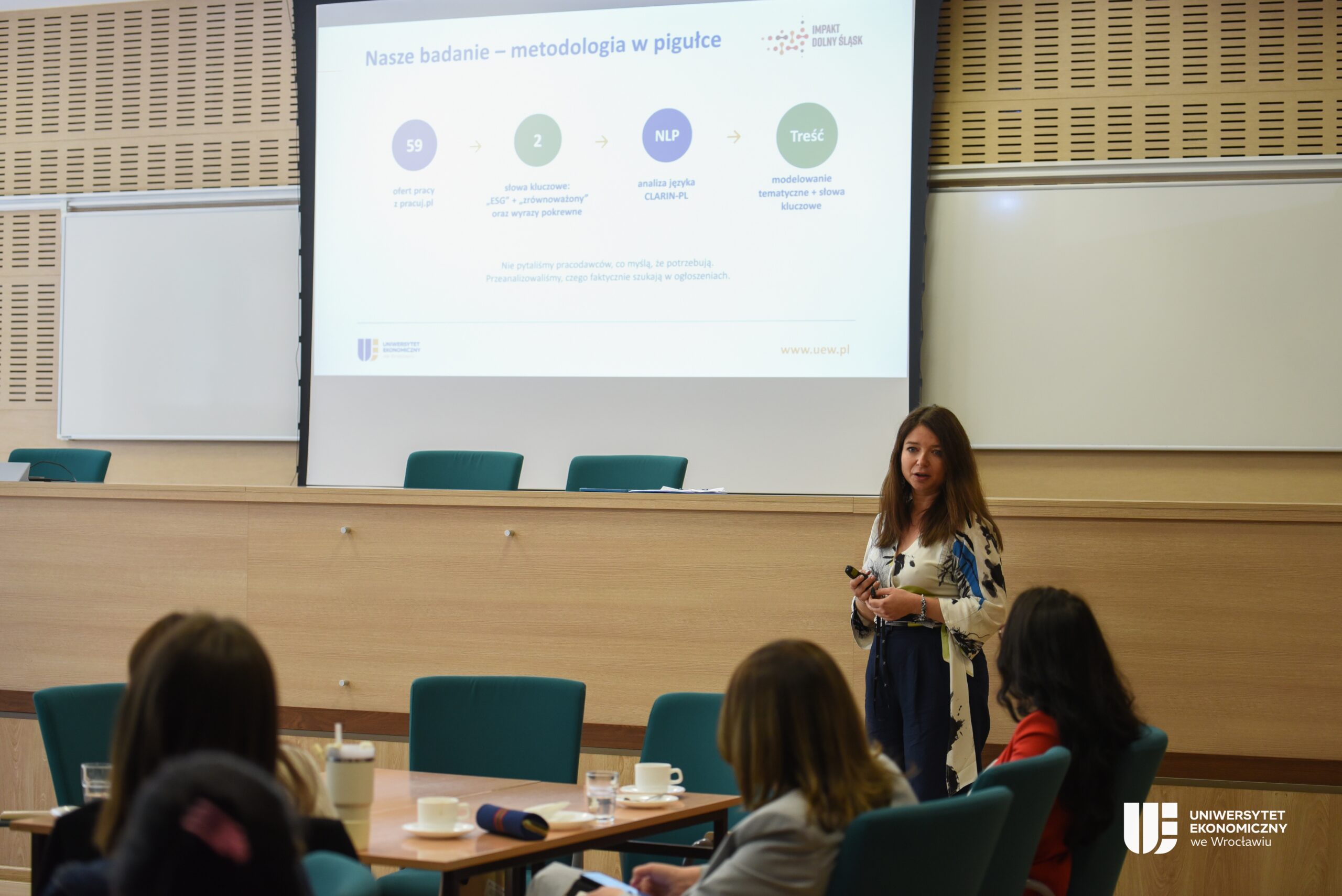
The introduction to the workshops was a presentation of the report “Go Green. Identifying the Green Skills Gap in the Labour Market” – a comprehensive study which, based on an analysis of actual job offers, shows what “green” competencies employers are looking for and how significantly the supply of qualifications diverges from the growing demand. It was indicated that demand for sustainability-related competencies is growing faster than their supply, and employers are looking both for ESG specialists and for individuals with a basic awareness of sustainability across various business functions.
The conclusions from this part of the meeting clearly indicated that universities – in cooperation with business – play a key role in preparing professionals capable of responding to the challenges of economic and social transformation.
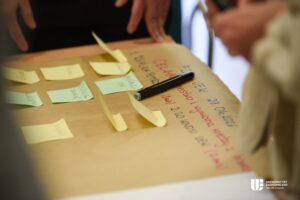
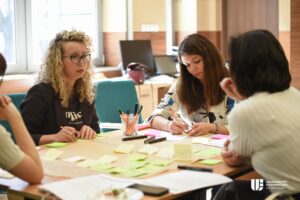
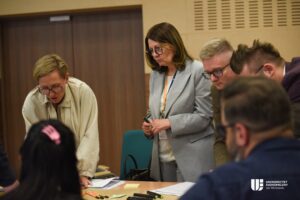
Workshops: Specifics Instead of General Recommendations
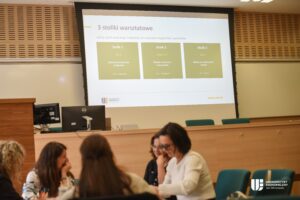
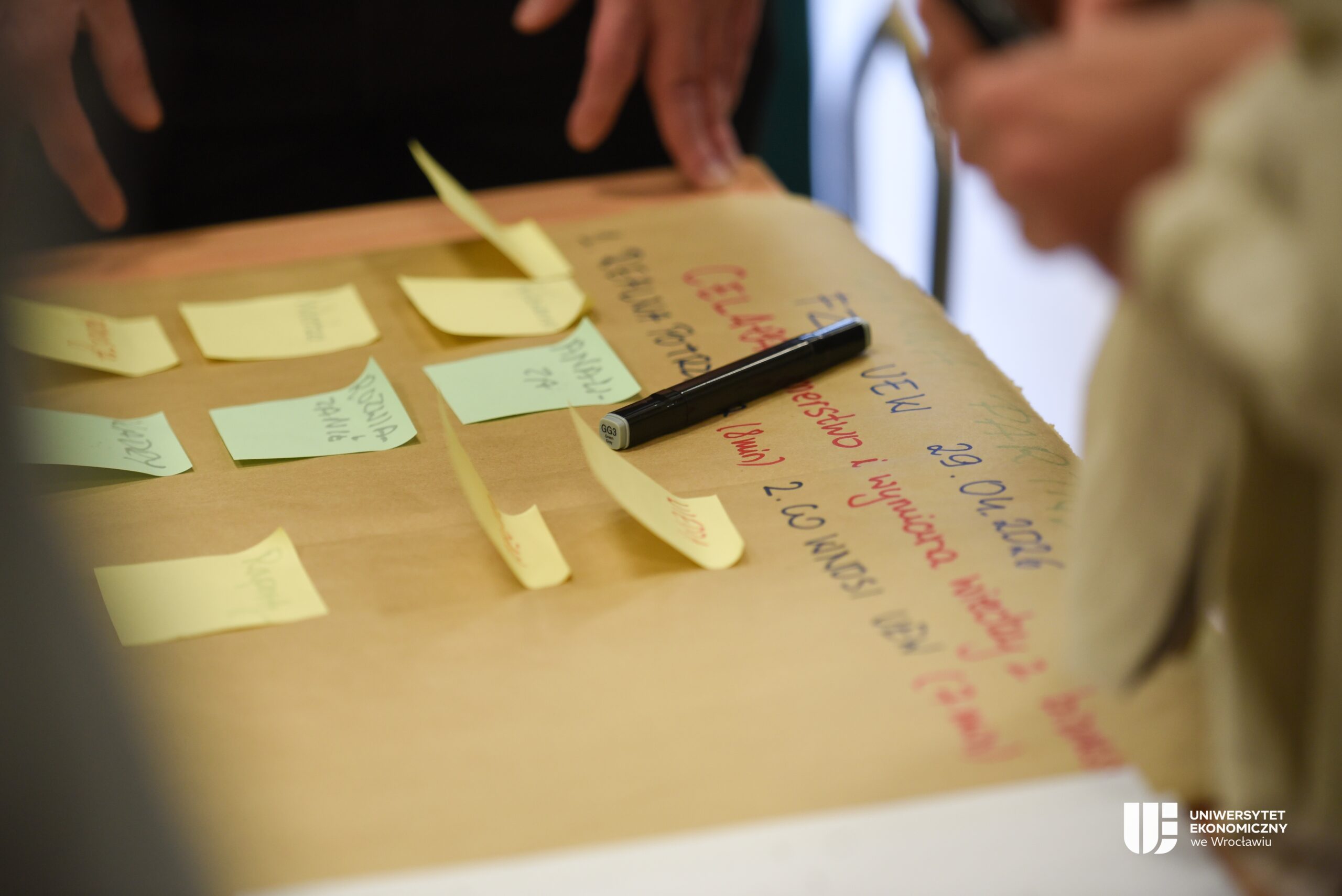
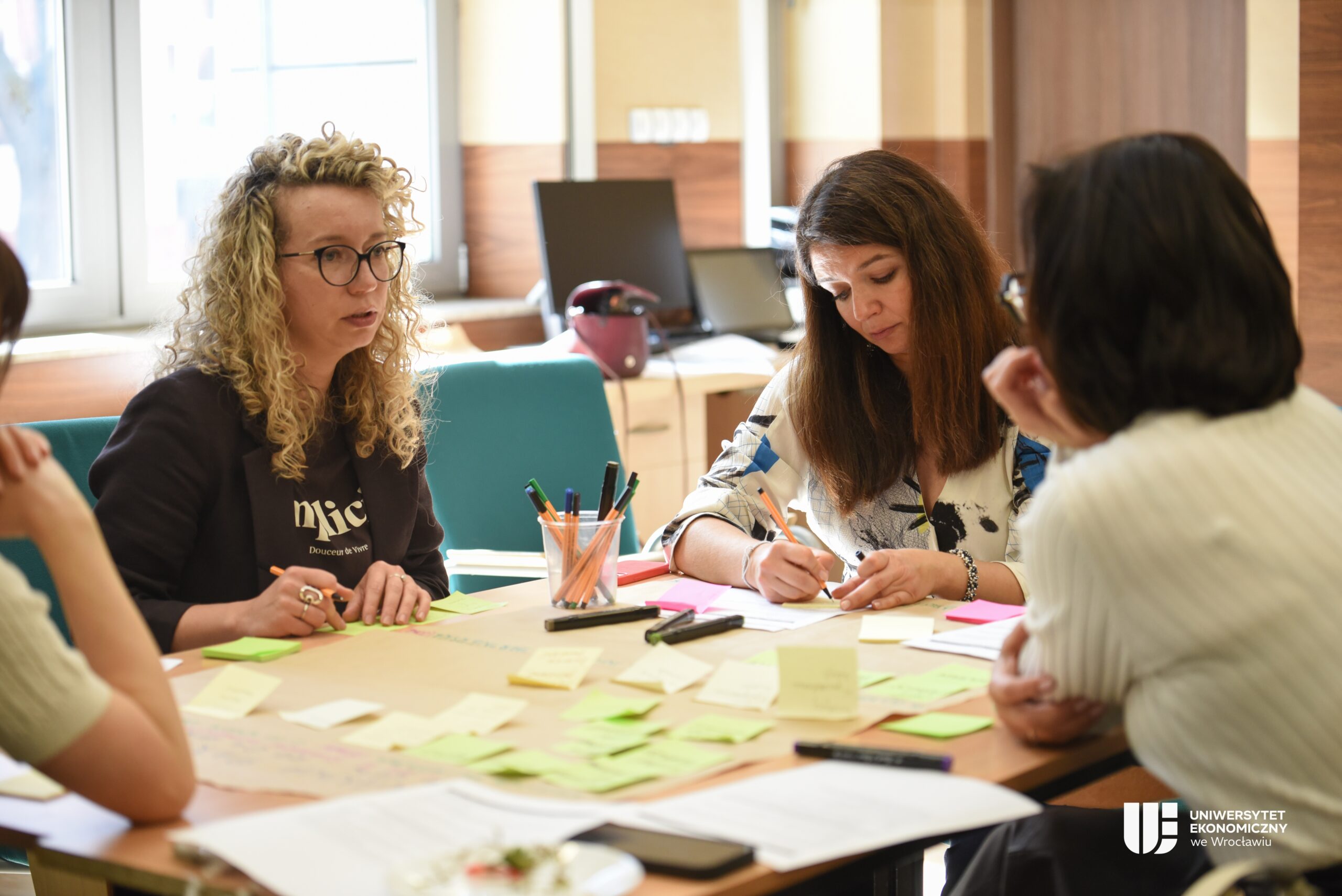
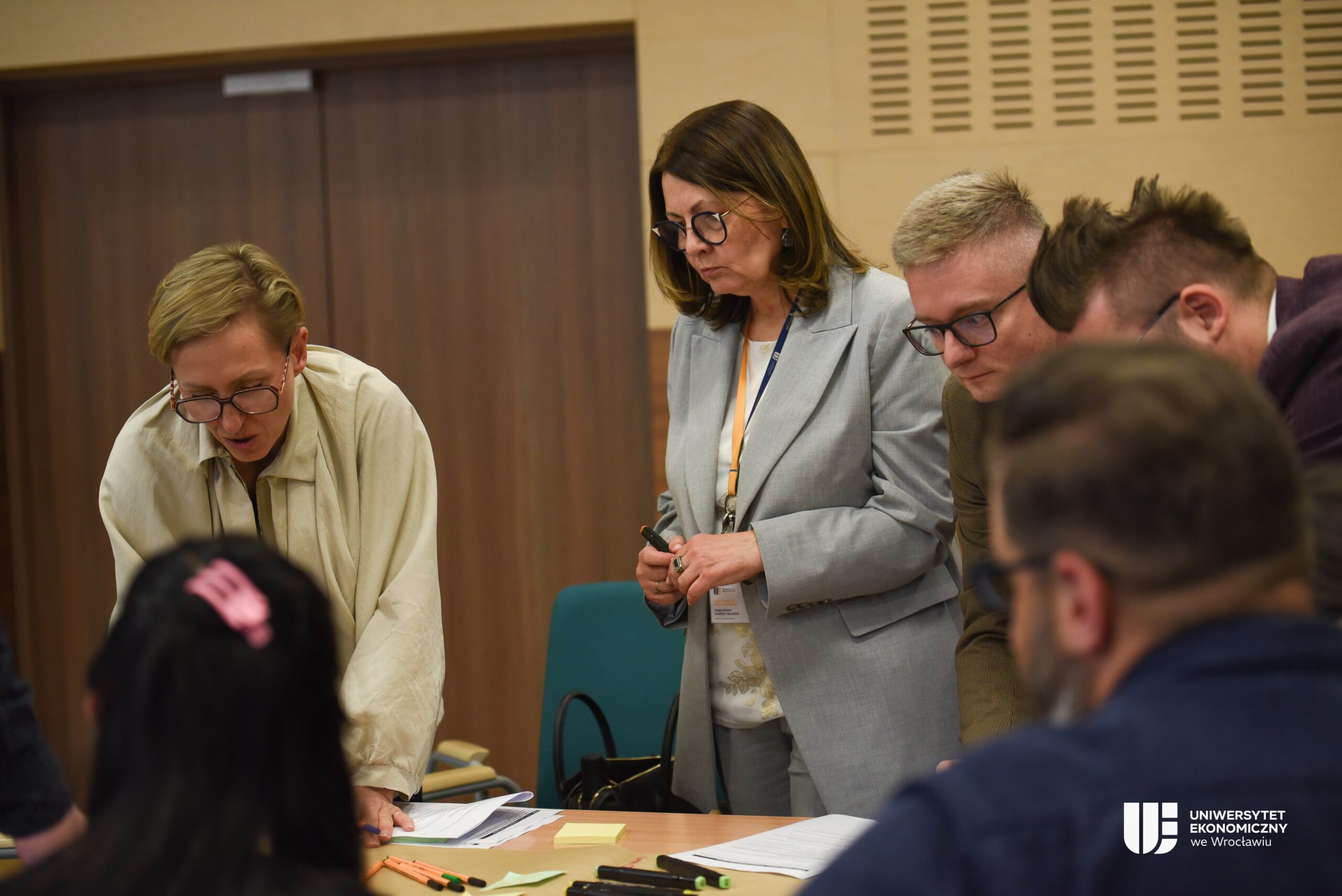
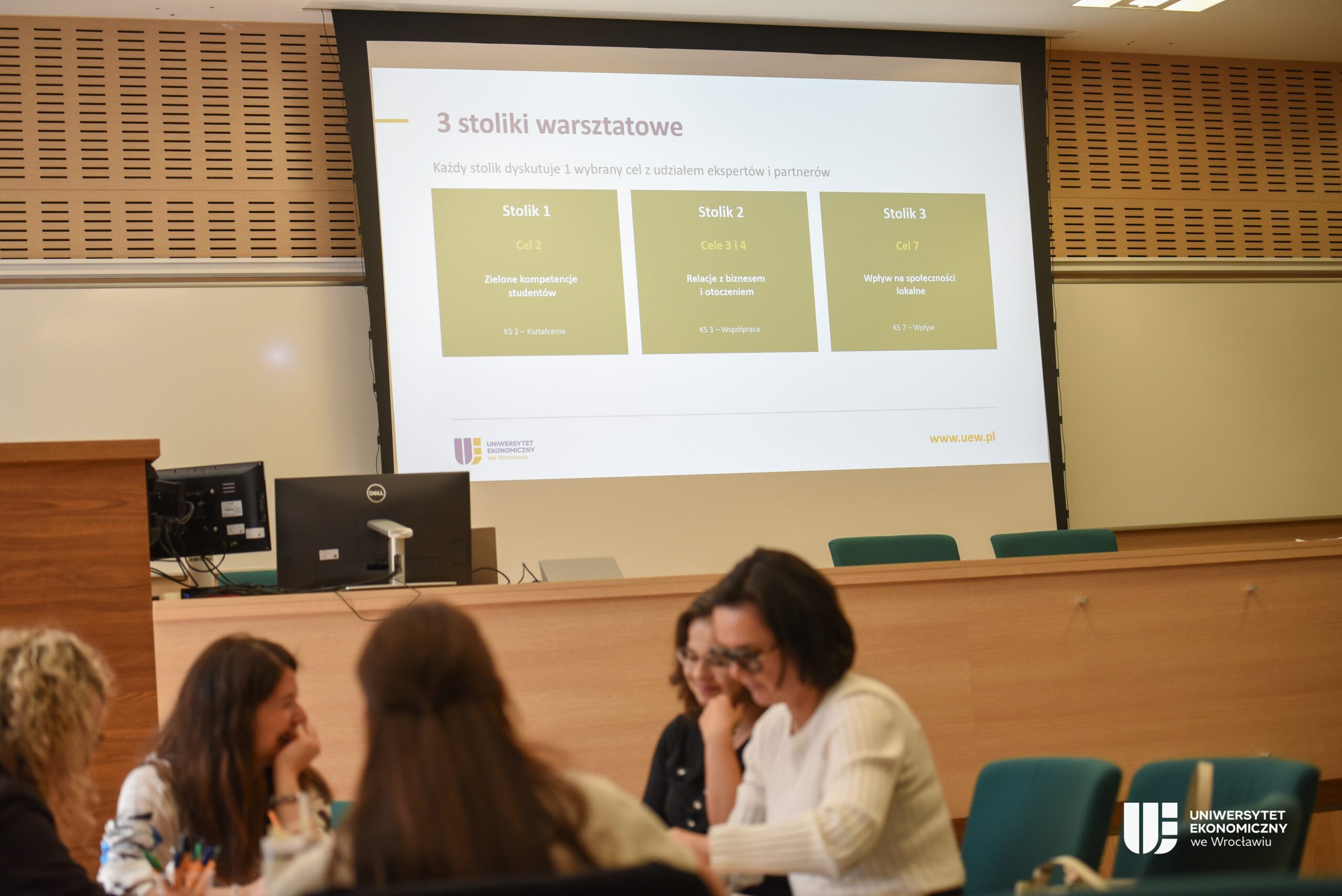
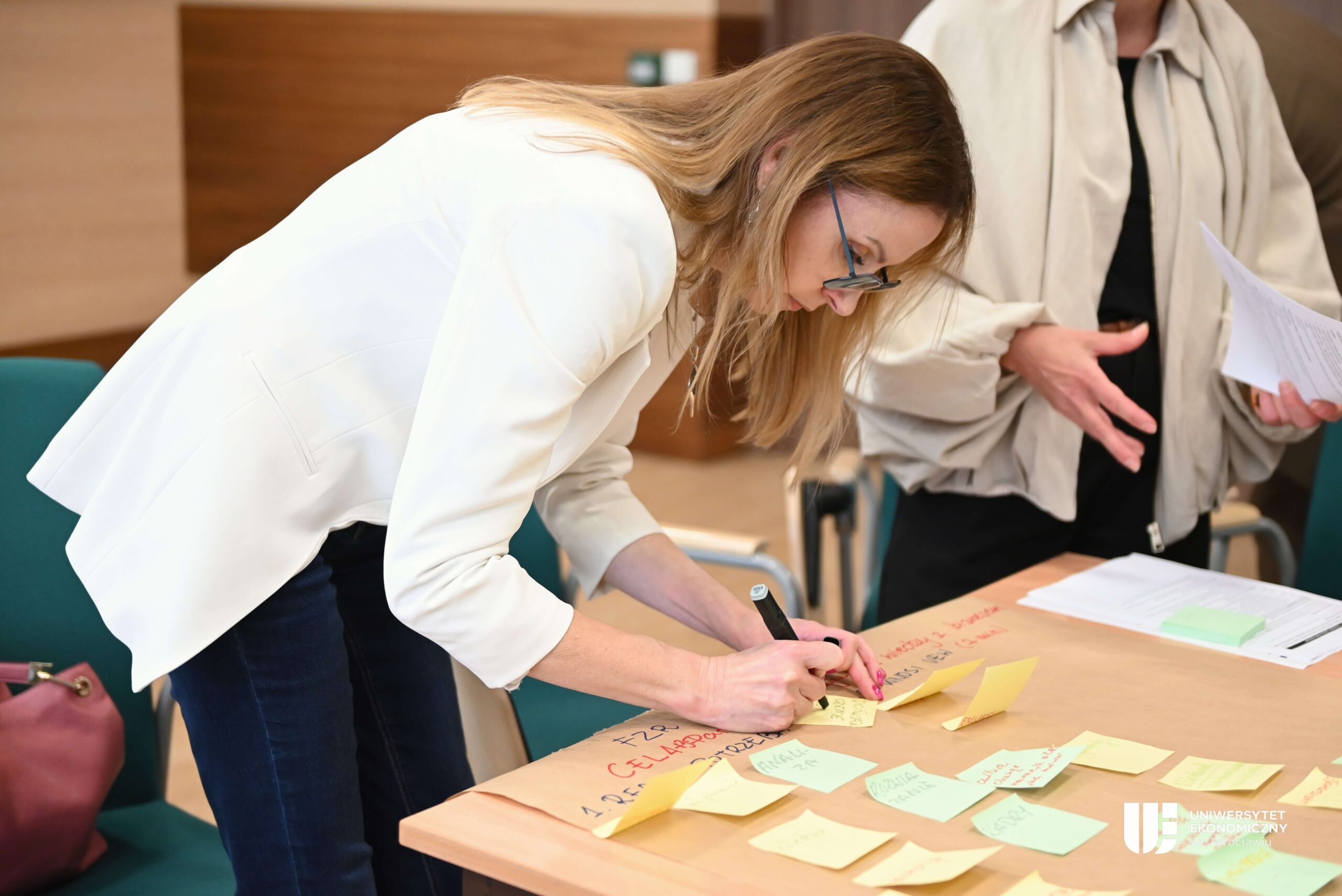
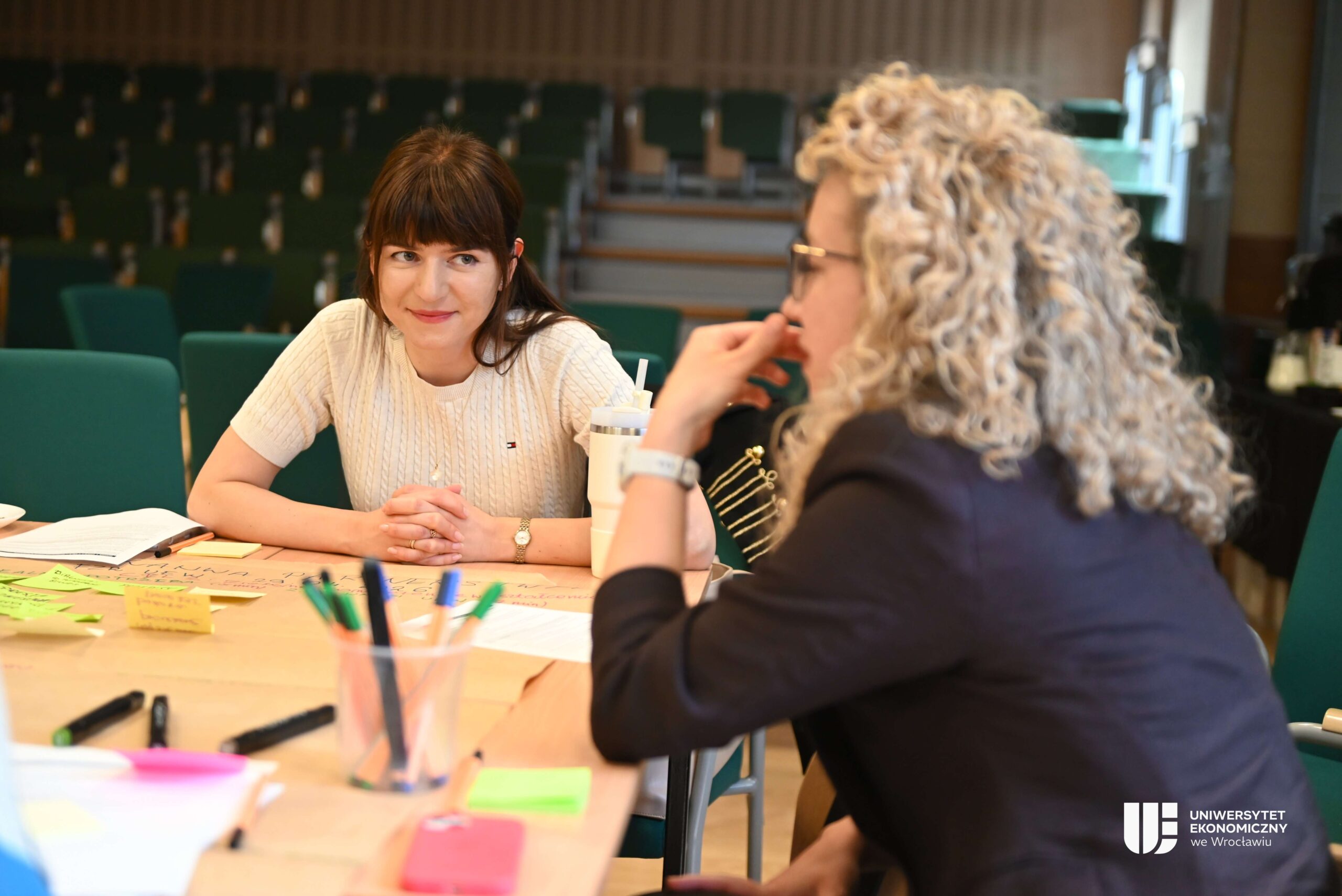
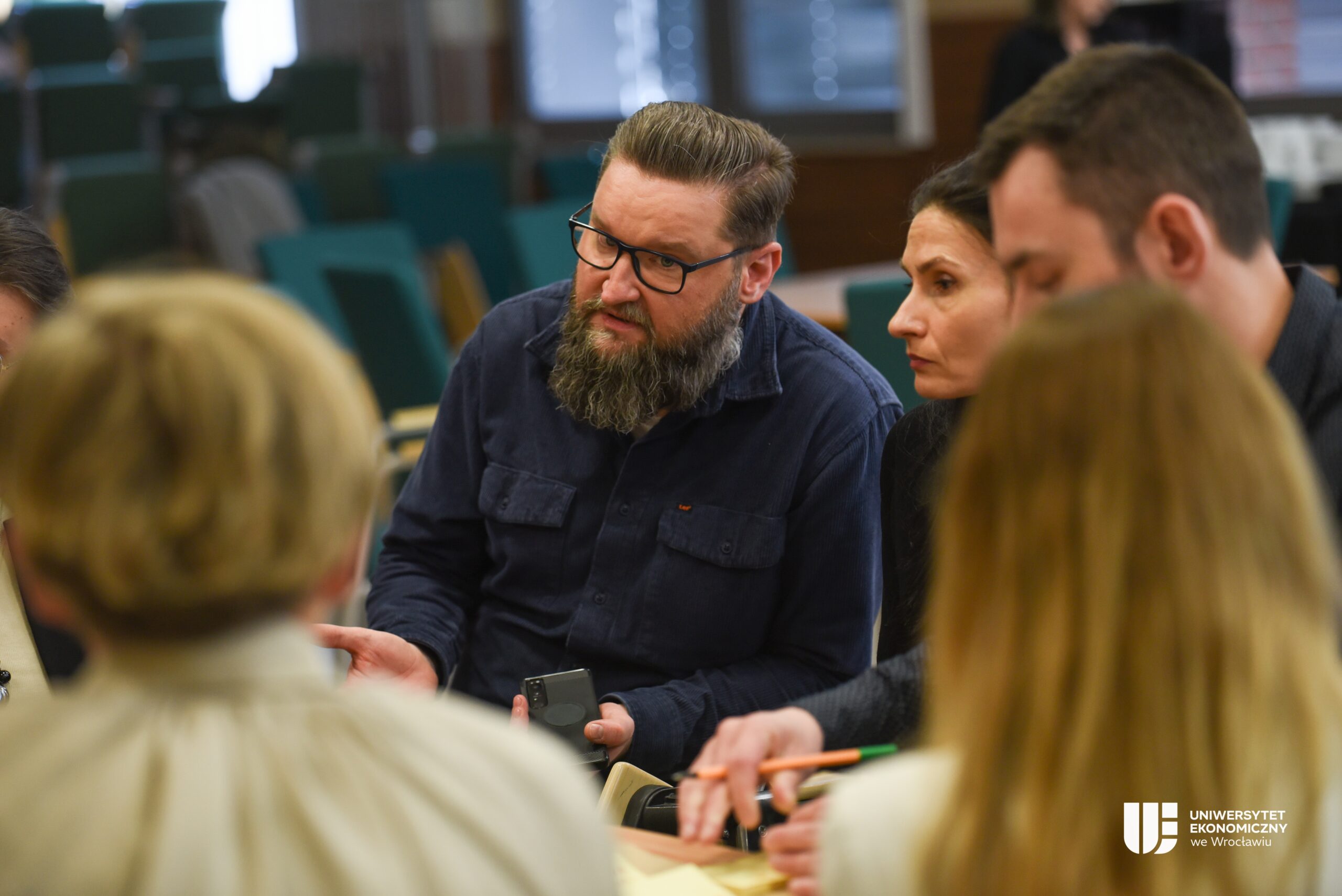
A key element of the Forum was workshop-based work conducted in a partnership format. Participants worked in two groups:
- around Goal 2 – developing students’ competencies in the area of sustainable development,
- around Goals 3 and 4 – cooperation with business and the socio-economic environment.
The workshops were designed to be results-oriented – each group was tasked with developing one specific partnership initiative, including identifying the parties involved and the first step achievable within 30 days.
Initiatives Developed and Their Contribution to the WUEB Sustainability Plan
1. Teaching cooperation in the area of ESG/SD
Teaching cooperation regarding the content of courses delivered in the area of ESG/SD. The proposal envisages cooperation between an external Expert in ESG/SD and a WUEB Employee teaching classes in this area. Due to dynamic regulatory changes and evolving market needs, such a solution will allow for ongoing adjustment of teaching content to current challenges and trends. In addition, it will enrich classes with up-to-date case studies and practical expert knowledge delivered directly by external ESG/SD Experts.
2. Annual diagnosis and report on needs/problems in the area of ESG/SD among ESG experts – cooperation with the ESG Institute
Given the dynamic changes in the area of ESG/SD, a survey will be conducted once a year among members of the ESG Institute, aimed at diagnosing problems and needs – including training needs – among experts and entities operating in Poland. Based on the survey results and a review of the relevant literature, an annual report will be prepared containing a diagnosis of key challenges and needs in the area of ESG/SD on the Polish market.
3. Student competition for solving a real ESG/SD problem in a company
A competition aimed at student teams, with a prize for developing and implementing the best solution to a problem submitted by a company operating in Wrocław and the surrounding area. The subject of the competition is a real-world ESG/SD challenge faced by the given enterprise.
The initiative aims to develop cooperation between students and business, including the organisation of study visits at the company’s premises. The outcome of the teams’ work will be the preparation of concrete solution proposals addressing the identified ESG/SD problem in the given enterprise.


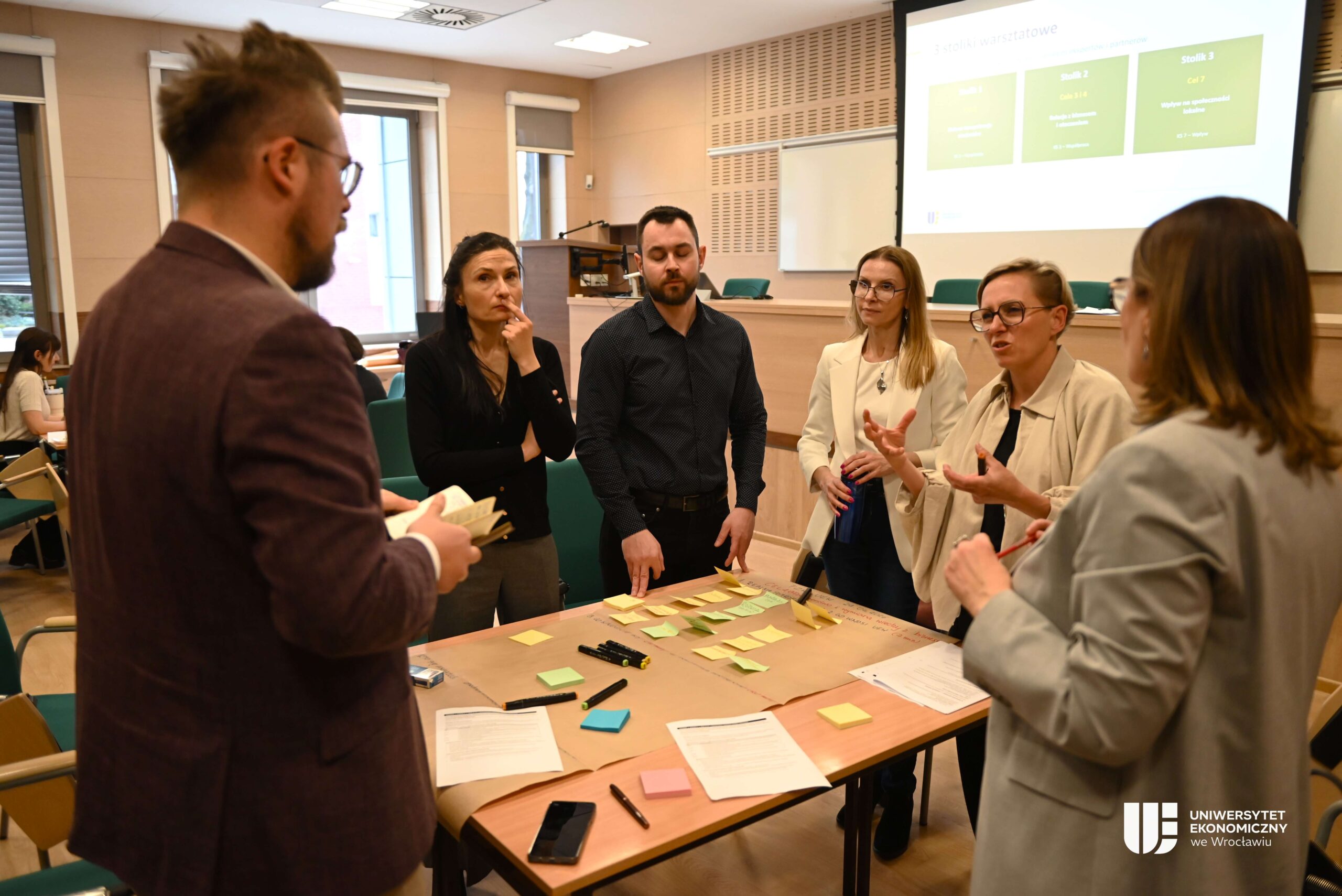
In the area of cooperation with business and the surrounding environment, three initiatives were developed which directly support the achievement of the metrics of the WUEB Sustainability Plan:
1. ESG/SD internship programme for students (pilot: Kelvion)
A flexible internship model (1–2 days per week for 1–2 months), enabling students to gain practical experience in ESG departments and link it to the topics of their diploma theses.
2. Annual WUEB–company partnership (pilot: REX Concepts CEE)
A model of in-depth cooperation in which the university and the business partner jointly identify the organisation’s challenges, design research and development initiatives, analyse financing opportunities, and engage startups (InQube) in the process of creating solutions.
3. “Novel Food” Task Force (WUEB + business partners)
A cross-sectoral working group focused on analysing and developing a selected thematic area, with the participation of university experts and business partners, leading to the development of concrete recommendations and solutions.
Main Conclusions from the Dialogue Session
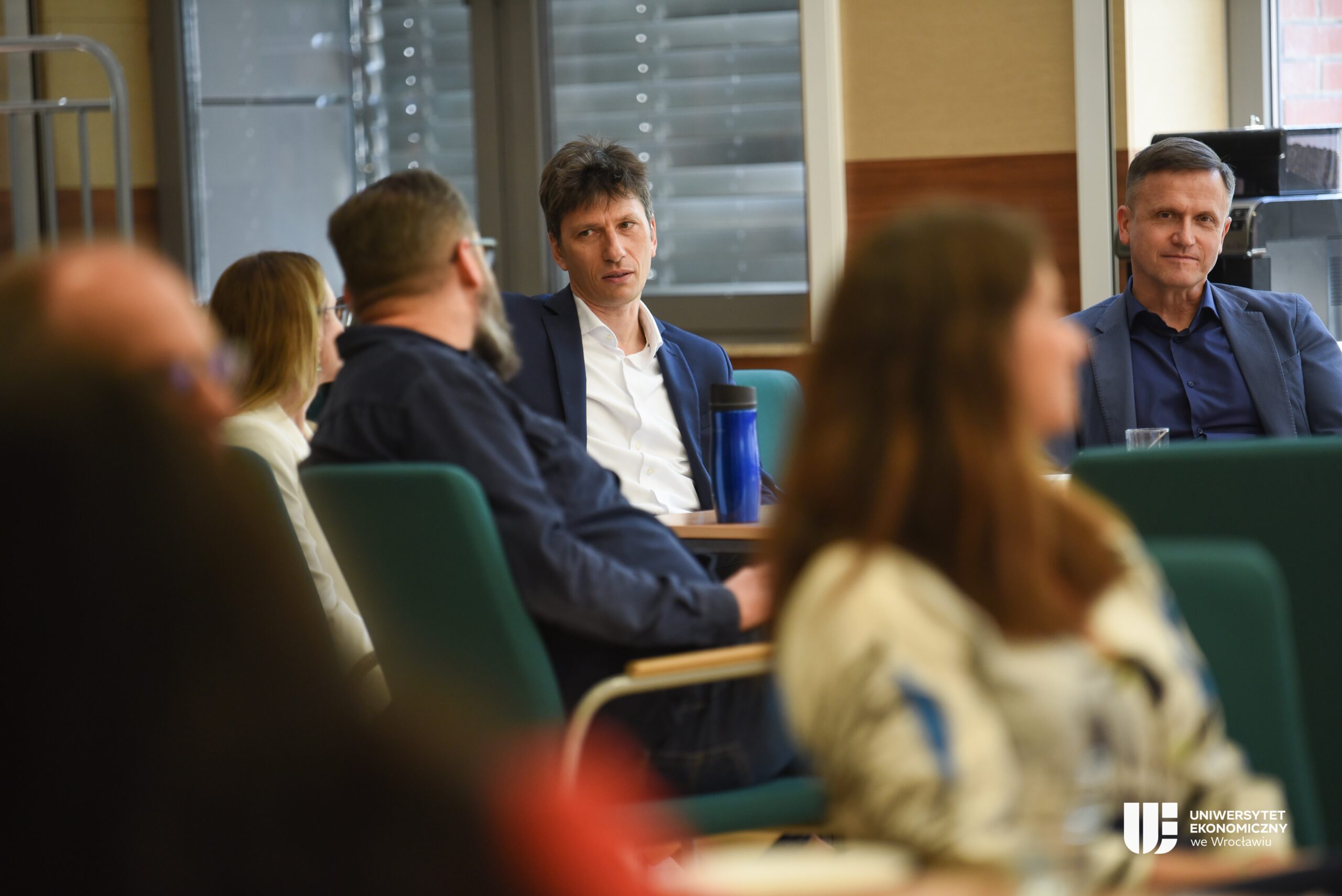
The discussions held during the Forum made it possible to identify several key directions for further action:
- the greatest value lies in moving from concept to implementation – initiatives should have assigned owners, concrete actions, and measurable results.
- the development of sustainability competencies should be cross-cutting in nature and cover various areas of education,
- effective cooperation between the university and business requires lasting, repeatable formats and clearly defined principles of partnership.


Next Steps
The initiatives developed constitute a starting point for further implementation activities. In the coming weeks, it is planned to specify the scope of the projects, confirm partner engagement, and launch the first pilot activities.
The 4th WUEB Sustainability Forum confirmed that the effective implementation of the university’s sustainability strategy requires not only well-defined goals and metrics, but above all genuine cooperation and shared responsibility of all stakeholders.