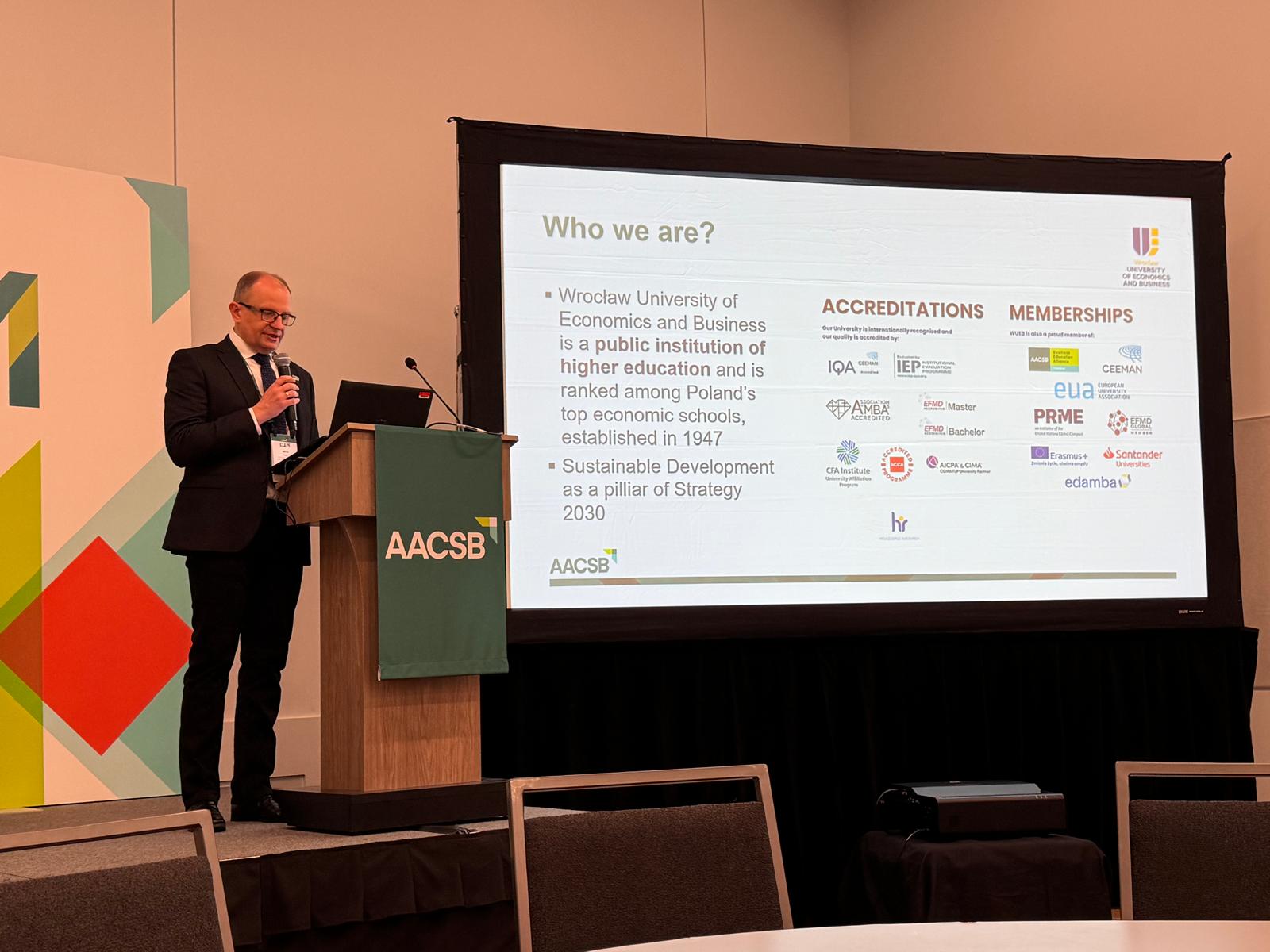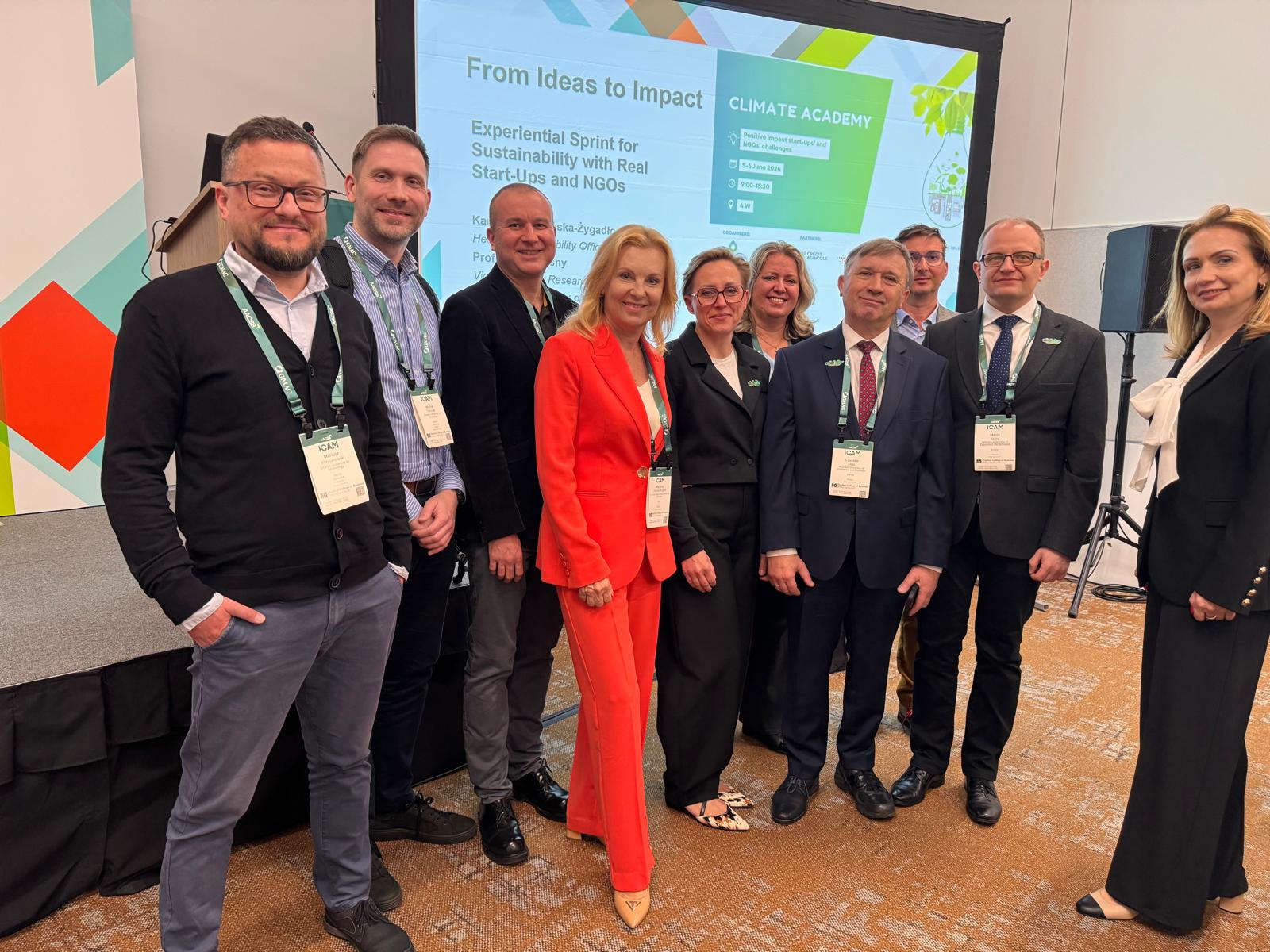


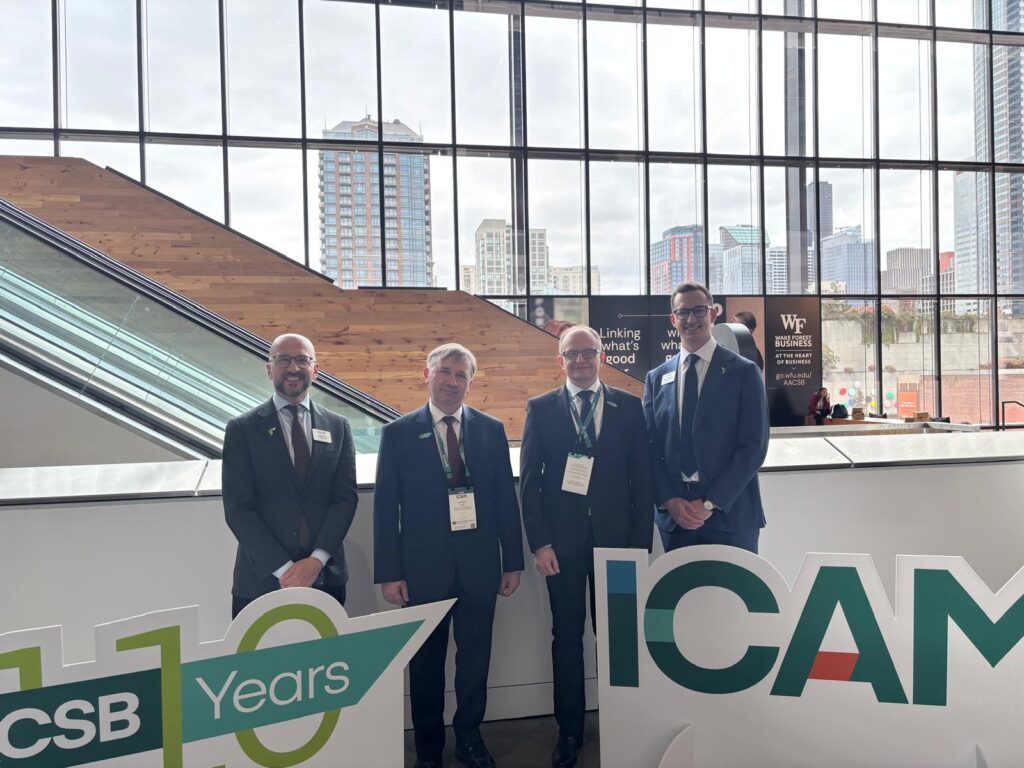
From 13th to 15th April 2026 Wrocław University of Economics (WUEB) took part in the AACSB’s International Conference and Meetings (ICAM) in Seattle.
ICAM is one of the most significant global events dedicated to business education and management, bringing together over 1,200 participants from around the world.
Discussions and sessions on current issues related to leadership, technology and social impact drive innovation that has a real impact on the development of ideas and global progress.
The event is organised by Association to Advance Collegiate Schools of Business (AACSB) – the leading international accrediting body for business schools, operating according to its proprietary Global Standards for Business Education™. Wrocław University of Economics and Business, as a member of AACSB, is currently undergoing the accreditation process.
- Discover more: WUEB Leaders visiting AACSB Deans Conference 2025
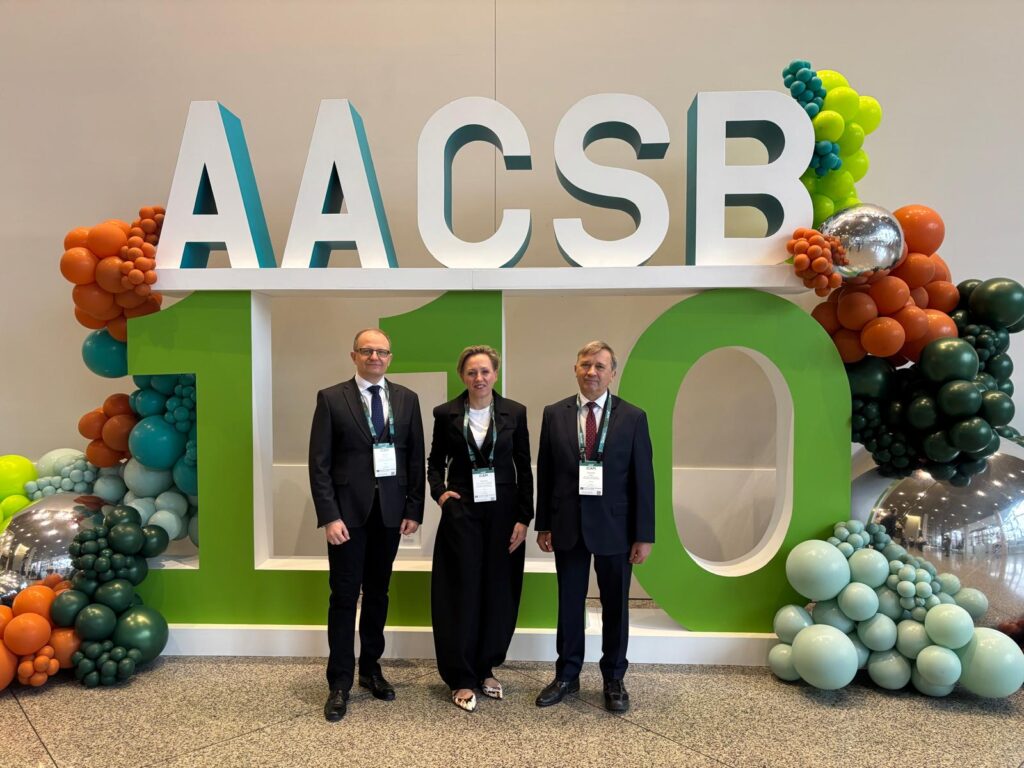
Our University was represented by the Rector Prof. Czesław Zając, Vice-Rector for Research Prof. Marek Kośny and Dr. Karolina Daszyńska-Żygadło.
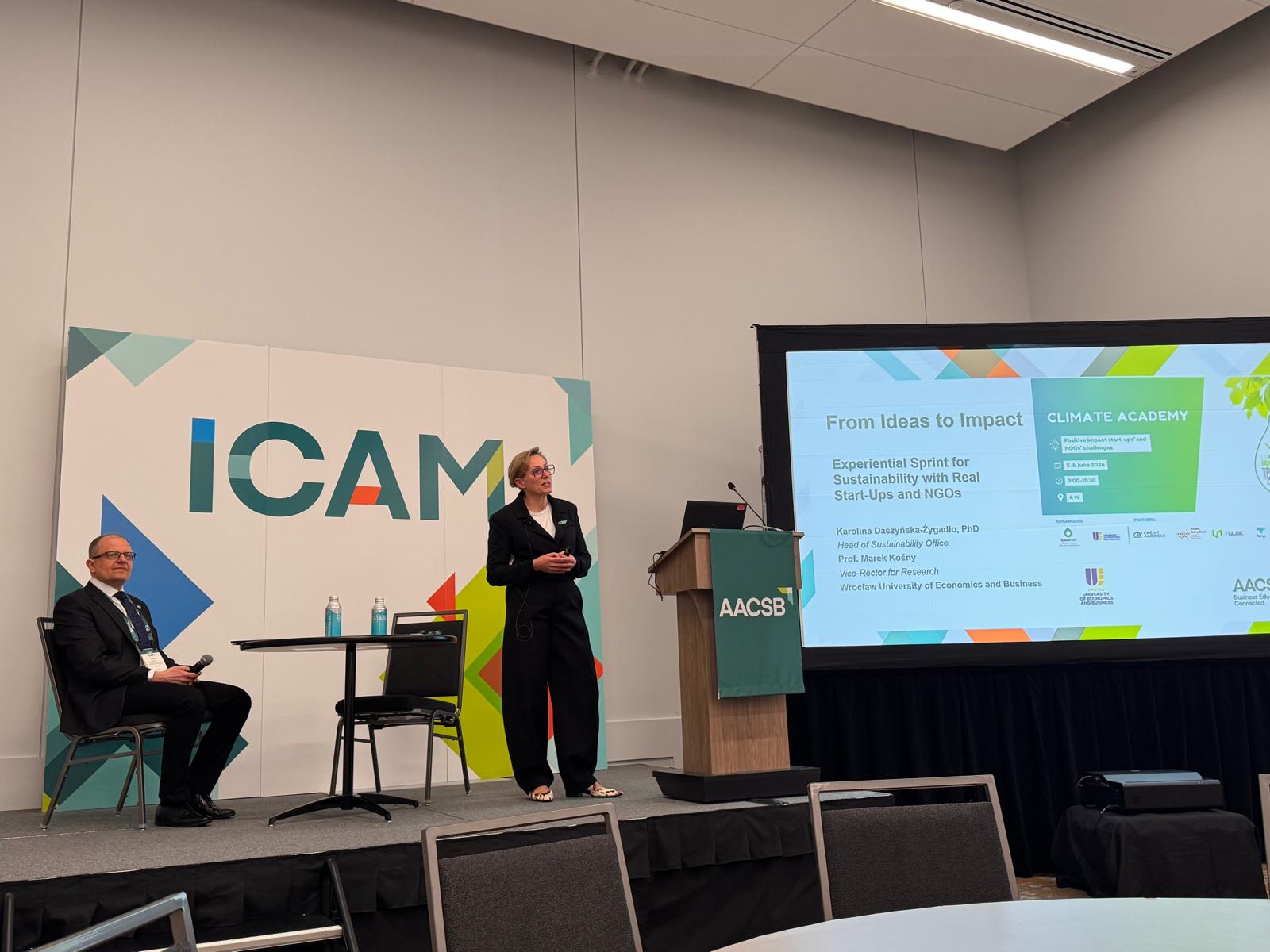
At the event, WUEB experts partnered the Resource Session From Ideas to Impact: Experiential Sprint for Sustainability, during which they presented an innovative, experiential workshop model. Summary is available below:
From Ideas to Impact: Experiential Sprint for Sustainability – summary
During the Resource Session “From Ideas to Impact: Experiential Sprint for Sustainability with Real Start-Ups and NGOs”, Professors Czesław Zając and Marek Kośny, along with Doctor Karolina Daszyńska-Żygadło presented a practical model for developing sustainability competencies based on student collaboration with real-world challenges from start-ups and NGOs.
The session addressed the growing “sustainability skills gap.” While employers increasingly demand graduates capable of solving complex, real-world problems, traditional teaching methods often fall short in developing action-oriented and collaborative skills. Simultaneously, students seek more meaningful educational experiences, while positive-impact organizations require fresh perspectives and conceptual support.
The model was illustrated through the Climate Academy, a two-day experiential sprint held in Wrocław in June 2024. International, interdisciplinary student teams tackled challenges from four impact-driven organizations: TerGo, Few., Ukrainka w Polsce, and LingoLift. Their tasks included encouraging business adoption of carbon footprint calculators, engaging users in sustainable consumption platforms, scaling social impact for foundations, and market positioning for social missions.
A key highlight was that the format’s success stems from the intentional design of the entire educational experience. The model is grounded in the PRME Impactful Five (i5) framework, which emphasizes five principles: making learning meaningful, fostering joy and well-being, developing supportive social interaction, facilitating active engagement, and supporting iteration. In practice, this combined stakeholder engagement, team dynamics, prototyping, and rapid feedback loops.
The session emphasized the importance of direct interaction between students and founders. By acting as mentors and providing immediate feedback, founders created a sense of professional accountability. This approach significantly boosted student motivation, agency, and a practical understanding of sustainability leadership.
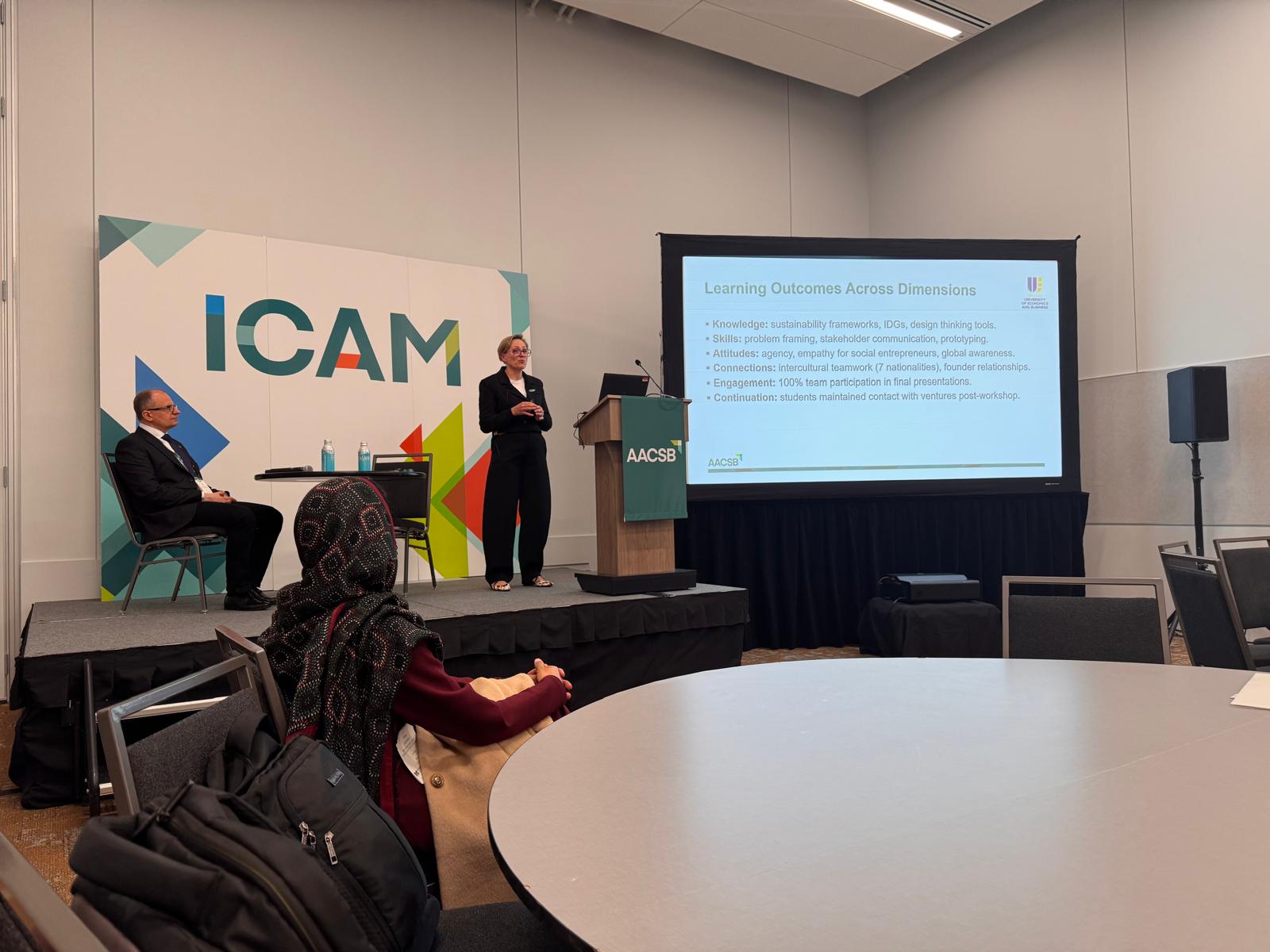
Evidence from the Climate Academy demonstrates that an intensive sprint leads to significant learning outcomes. Participants developed knowledge of sustainability frameworks (including Inner Development Goals) and design thinking tools, alongside skills in problem framing and stakeholder communication. Furthermore, it fostered attitudes like empathy for social entrepreneurs and global awareness, while the presence of students from seven nationalities enhanced cross-cultural collaboration.
Three key takeaways for teaching practice were identified: the value of partnering with local impact ventures for authentic learning, the necessity of using intentional pedagogical frameworks like i5, and the effectiveness of the sprint format in building focus and responsibility. The session concluded with an invitation for future collaboration, showcasing how universities can strengthen ties with their socio-economic environment while training the next generation of conscious leaders.
Participation in the ICAM marks another step towards further internationalisation of the Wrocław University of Economics and Business. We will keep you updated on further steps towards achieving AACSB accreditation.